
Capital markets regulator Sebi has amended norms to bring buying and selling of mutual fund units under the ambit of insider trading rules. At present, insider trading rules are applicable to dealing in securities of listed companies or those proposed to be listed, when in possession of Unpublished Price Sensitive Information (UPSI). The units of mutual funds are specifically excluded from the definition of securities under the rules.

About 24 fund houses saw a decline in their debt AUMs in the past one year.

Schemes among the six wound up by the fund house had given a loan of Rs 518 crore against non-convertible debentures to the firm in March 2019, according to ED's chargesheet.

'We know that returning money to unitholders at the earliest is the first and most important step towards resurrecting our brand and regaining investor trust.'

'The shifts in US involvement in global conflicts and geopolitical alliances could introduce uncertainties.'

A strong influx of 11 equity new fund offers (NFOs) in June, particularly within the thematic space, helped mutual funds collect Rs 14,370 crore - the highest ever via such introductory offers. This surpassed the previous high recorded in July 2021, where four NFOs accumulated Rs 13,709 crore, with ICICI Prudential MF's flexicap NFO alone mobilising Rs 9,808 crore.

Small and midcap schemes may impose restrictions on redemptions, cap employee withdrawals, and increase the exit load, while ensuring a proportionate liquidation of the portfolio during market crises to safeguard the interests of all investors. These measures have been outlined in the investor protection policies recently put out by mutual fund (MF) trustees. The policies for small and midcap schemes were prepared by MF trustees following directives from the Securities and Exchange Board of India (Sebi) earlier this month.

'MFs acted as reckless lenders and not as prudent investors.' 'Clearly, how debt funds are being run is a systemic issue,' warns Debashis Basu.

Among individual fund houses, SBI MF was the biggest gainer in absolute terms; its AAUM rose Rs 66,090 crore, compared to its asset base in the corresponding period of FY18, reports Jash Kriplani.

The contribution from asset management companies (AMCs) has surpassed the Rs 3,000 crore target for the creation of a Rs 33,000 crore backstop facility for debt mutual funds (MFs). The initial corpus for the Corporate Debt Market Development Fund (CDMDF) is nearly Rs 3,100 crore, according to multiple government officials and AMC executives. "The fund is operational now. "The required corpus has been raised by AMCs and the remaining part (Rs 30,000 crore) is in the form of a guarantee from the government which will be activated only in case of a credit event," explained D P Singh, joint CEO and deputy MD, SBI MF.
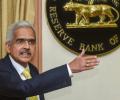
In a statement, the central bank said heightened volatility in capital markets in reaction to Covid-19 has imposed liquidity strains on mutual funds (MFs), which have intensified in the wake of redemption pressures related to closure of some debt MFs and potential contagious effects therefrom.

As the stock markets scale new peaks almost every day in a pre-poll rally, a vast majority of Indian investors expect a further rise in equities in the current year, says a survey.

Experts say the impact on the schemes' NAVs may vary in the coming days, depending upon how fund houses treat the developments on VIL and whether there are any further rating downgrades or credit events.

Equity fund managers say large-caps offer higher relative safety, especially in such times.

Mutual fund houses hold Rs 3,400 crore of Yes Bank's 'riskier' bonds. Reliance MF, Franklin Templeton MF and UTI MF account for bulk of these exposures.

The government has been pressing citizens to pay taxes and be compliant, but they have very little to show regarding improved efficiencies in the companies they themselves own, the fund managers said.

Focus on large-caps and ensure that the portfolio is balanced.

'The ability to tailor schemes to market conditions and invest in unlisted equity and real estate, as well as commodities, makes Alternative Investment Funds a sought after platform.'

The sector needs to move away from such concepts.

Last October's circular meant that downstream investment by such funds by way of subscription or acquisition of shares would have been considered "indirect foreign investment" if their investment manager or sponsor is owned or controlled by a non-resident. The finance ministry has now said that mutual funds that invest more than 50 per cent in equity shall be omitted from the Securities and Exchange Board of India (Mutual Funds) Regulations, 1996.

Don't exit from growth-style funds as they may benefit next from a shift in investor preference.

When looking at fund returns, avoid looking at just the past 12 months' performance, says Sanjay Kumar Singh

'India is an equity market with a breadth and depth of companies to invest in.'

Today, it holds $131 billion in assets under management.

Co-founder Nilekani could take the role of non-executive chairman, becoming a bridge between the board and Murthy, reports Ayan Pramanik.

Monitor how long the high cash position lasts. If it lasts for a month or two, it is fine. But if it continues for a couple of quarters, seek your advisor's opinion on whether to exit the fund.

Most large fund houses, such as HDFC MF, ICICI Prudential AMC, Reliance MF, Reliance MF, Birla SunLife MF and SBI MF, have the backing of large banks or financial institutions, giving them reach and understanding, they say.

The SIP route suits the salaried class, by matching their income flows with investment frequency.

Following the money and freezing anything unaccounted is the only way to set an example for others, suggests Debashis Basu.

UK's Cairn Energy Plc plans to bring lawsuits in the US and other countries to pierce the corporate veil between the Indian government and its owned companies such as in oil and gas, shipping, airline and banking sectors, to seize their overseas assets to recover $1.2 billion ordered by an international arbitration tribunal. The firm has moved courts in the US, UK, Canada, France, Singapore, the Netherlands and three other countries to register the December 2020 arbitration tribunal ruling that overturned the Indian government's Rs 10,247 crore demand in back taxes and ordered New Delhi to return $1.2 billion in value of shares it had sold, dividends seized and tax refunds withheld to recover the tax demand. With the government so far refusing to honour the arbitration award and instead choosing to challenge it, Cairn is looking to enforce it by seizing overseas Indian assets, Dennis Hranitzky, head of the sovereign litigation practice at Quinn Emanuel Urquhart & Sullivan, a law firm representing the company, told PTI.

Stocks such as ICICI Bank, Axis Bank, State Bank of India, Bank of Baroda and HDFC Bank are among the top banking picks of analysts for 2017. A decline in cost of funds and treasury gains are expected to help stabilise their net interest margins

rediffGURU Ulhas Joshi answers readers' mutual fund queries
Steep volatility in the markets has made fund managers cautious, awaiting opportunities to deploy the cash.

'The potential headwind is that the Indian economy is likely to see a slowdown in growth rates over the next two years.'

Instead of getting swayed by market gyrations, investors must stay invested for the long term, advises Sarbajeet K Sen.
Market watchers believe that the change in guidelines fly in the face of some of the recent initiatives taken by the government, such as easing norms for foreign portfolio investors.

Gold funds have returned -5.2 per cent, while the Sensex is down 7 per cent in the past year.

Investing merely on the basis of past return can land you in trouble even in debt funds, a supposedly safe asset class, suggests Sarbajeet K Sen.

Debt funds have exposure of nearly Rs 8,000 crore to Zee group papers. Aditya Birla MF, HDFC MF, Franklin Templeton MF, and ICICI Prudential MF have the highest exposure, reports Samie Modak.

'Today, there is no easy money to be made after the run-up in equities.'
 © 2026 Rediff.com - Advertise with us - Disclaimer - Privacy Policy - Sitemap - Feedback - About us - Terms of use - Grievances